

In a healthcare setting, cleanliness is never just about appearance. It’s directly tied to patient safety, staff protection, infection prevention, and the overall trust people place in the facility. When a patient room, treatment area, or exam space is not cleaned thoroughly, the risks go far beyond dust or surface dirt.
Incomplete cleaning can leave behind contaminants that create unnecessary exposure concerns for the next patient, healthcare workers, and visitors. That’s why terminal cleaning is crucial in healthcare environments. Unlike routine daily cleaning, terminal cleaning is a more detailed, methodical process designed to thoroughly clean and disinfect a space before it is used again.
It is often performed after patient discharge or transfer, or when a room must be reset to a higher standard of cleanliness. For facilities that cannot afford inconsistency, rushed work, or missed surfaces, this level of cleaning matters.
At Cleanstart, we understand that healthcare cleaning requires more than a basic checklist. It requires a disciplined process, close attention to detail, and a clear understanding of how medical environments must be maintained with sensitivity. Our professional terminal cleaning services help support safer conditions, stronger facility standards, and greater confidence in the cleanliness of the space.
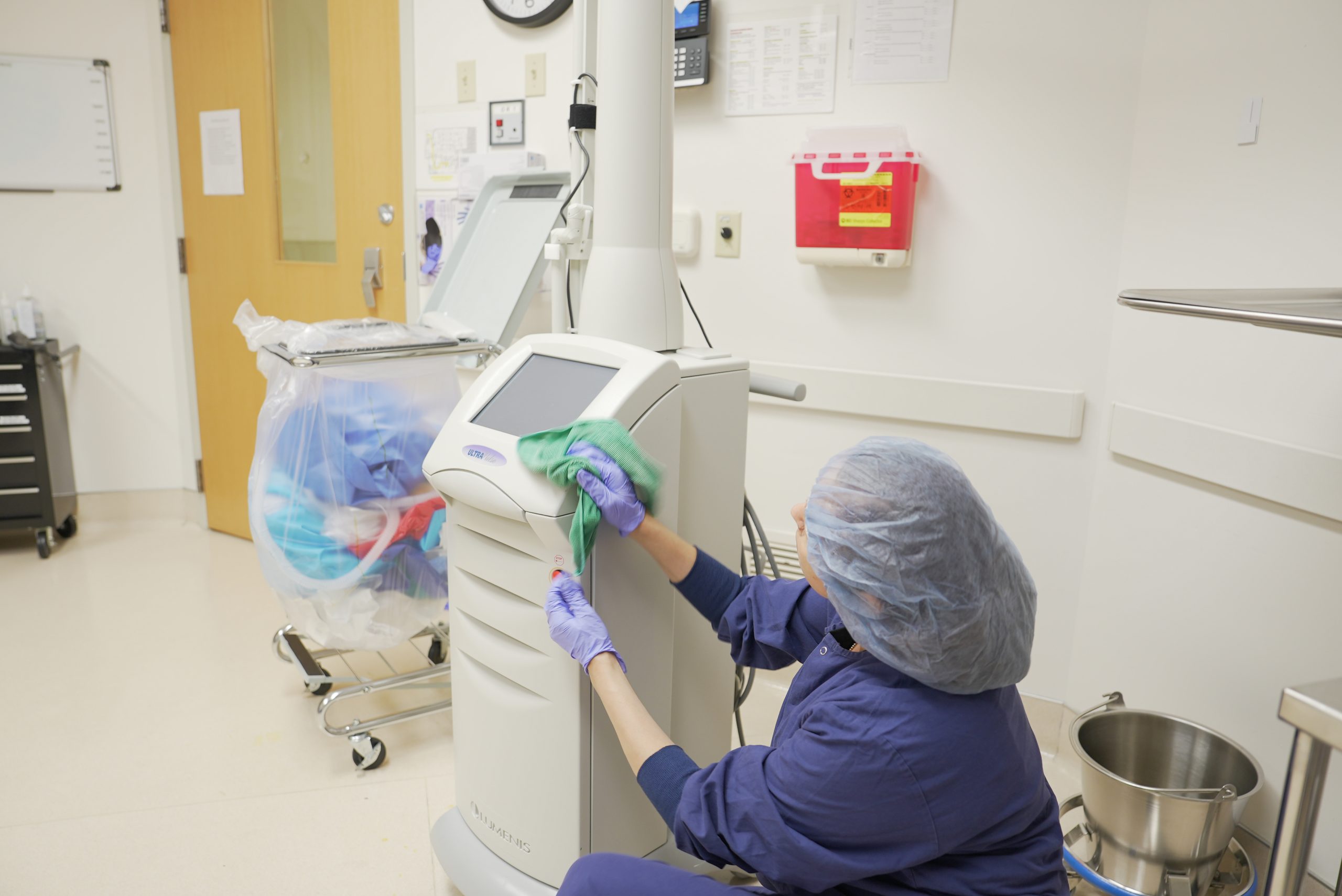
What Is Terminal Cleaning in Healthcare?
Terminal cleaning is a comprehensive cleaning and disinfection process used in healthcare facilities to prepare a room or care area for its next use. It is typically performed after a patient has been discharged or transferred, or when a room must be thoroughly cleaned before another patient, provider, or staff member enters the space.
In healthcare settings, this process goes beyond wiping down obvious surfaces. Terminal cleaning involves detailed attention to high-touch points, patient contact areas, restrooms, floors, fixtures, doors, and other surfaces that may harbor contaminants. It is a more deliberate and thorough process than standard daily cleaning because the environment must be addressed as a whole, not just spot cleaned where visible messes exist.
In hospitals, clinics, outpatient centers, surgical environments, and other medical facilities, terminal cleaning is essential to maintaining sanitary conditions. These are spaces where patient turnover is frequent, vulnerable individuals may be present, and the consequences of poor cleaning can be serious. That is why trained professionals and a consistent cleaning method matter so much.
When Cleanstart provides terminal cleaning services, the focus is not just on making a room look clean. The focus is on helping healthcare facilities maintain a higher, more dependable standard of cleanliness through a structured, thorough process suited to environments where details matter.
Why Terminal Cleaning Matters in Healthcare
Terminal cleaning is particularly important in healthcare because the environment directly affects health and safety. In a typical commercial space, missed dust or an overlooked surface may be unprofessional. In a healthcare setting, the consequences can be much more serious.
Patient rooms, exam rooms, treatment areas, and shared clinical spaces are used by people who may already be ill, recovering, immunocompromised, or otherwise more vulnerable to contamination.
Healthcare facilities also experience constant movement throughout the day. Patients come and go. Staff move between rooms. Visitors interact with shared spaces. High-touch surfaces are used repeatedly, and contamination can spread quickly when cleaning is incomplete or inconsistent.
That is why terminal cleaning is not simply a deeper version of routine janitorial service. It is part of a broader effort to support infection prevention and maintain safer conditions throughout the facility.
At Cleanstart, we understand that healthcare environments require more than visible cleanliness. They require a disciplined cleaning approach that addresses both obvious surfaces and areas often overlooked when time is short, or standards are inconsistent.
In spaces where patient wellbeing, staff safety, and public trust are all on the line, terminal cleaning helps provide a more reliable level of protection.

Terminal Cleaning vs. Routine Daily Cleaning
Routine daily cleaning and terminal cleaning both serve important purposes in a healthcare facility, but they are not interchangeable. Daily cleaning focuses on maintaining the space throughout normal operations.
It helps control everyday buildup, address visible soil, disinfect commonly touched surfaces, and keep rooms and shared areas presentable and functional as people move through them.
Terminal cleaning is more detailed and comprehensive. It is performed when a room or care area needs to be fully reset before its next use, such as after a patient discharge or transfer. Instead of focusing only on the surfaces most used during the day, terminal cleaning addresses the entire room.
That includes high touch points, fixtures, restroom surfaces, doors, walls, floors, edges, and areas that may be missed during faster maintenance cleaning.
Another major difference is the level of intentionality involved. Routine cleaning is part of ongoing facility upkeep. Terminal cleaning is a focused process with a higher standard of thoroughness because the goal is to reduce contamination risks as much as possible before the next occupant enters the space.
It requires consistency, attention to detail, and the correct use of products and procedures.
Healthcare facilities need both types of service to work together. Daily cleaning helps maintain order and sanitation during active use, while terminal cleaning provides the deeper level of care needed when the space must be thoroughly cleaned and disinfected.
When both are handled properly, the facility is better positioned to support health, safety, and confidence in the environment.

Why Healthcare Facilities Cannot Afford to Cut Corners
In healthcare, cutting corners on terminal cleaning is never a minor issue. These are environments where people come for treatment, recovery, diagnosis, and care. Many patients are already dealing with illness, injury, weakened immune systems, or recent procedures that make them more susceptible to environmental contamination.
When cleaning is rushed, inconsistent, or incomplete, the risk does not stay on the surface. It carries over to the next patient, the next staff interaction, and the next use of the room.
A healthcare facility also has more at stake than cleanliness alone. It has to protect patient well-being, support staff safety, reinforce infection prevention efforts, and maintain confidence among families and visitors.
A room that looks clean is not enough if critical touchpoints, hidden surfaces, or shared areas have not been properly addressed. Terminal cleaning must be thorough because healthcare spaces are used constantly, touched frequently, and are expected to meet a higher standard every single day.
This is one of the reasons professional process matters so much. Cleanstart understands that healthcare cleaning requires consistency, attention to detail, and a methodical approach that does not leave important steps up to chance.
In facilities where safety and trust are part of everyday operations, terminal cleaning must be treated as an essential responsibility, not a box to check.
Patient Safety Comes First
Patient safety is the clearest reason terminal cleaning matters so much in healthcare settings. Every time a patient room, exam room, or treatment area is turned over for the next occupant, that space needs to be cleaned and disinfected with care.
If it is not, contaminants left behind on high-touch surfaces, fixtures, flooring, or shared elements can create unnecessary risks for the next person who enters the room.
This becomes even more important in facilities that care for vulnerable populations. Patients may be recovering from surgery, managing respiratory illness, receiving treatment for serious medical conditions, or living with compromised immune systems.
In these situations, the margin for error is smaller. A missed surface or rushed process is not just a quality issue. It can directly affect environmental safety.
Proper terminal cleaning helps support a safer patient experience by thoroughly cleaning the room before it is used again. It is part of creating a clean, controlled setting where healthcare providers can do their work, and patients can receive care with greater peace of mind.
Protecting Healthcare Staff and Visitors
Patients are not the only people affected by incomplete terminal cleaning. Healthcare staff, caregivers, vendors, and visitors all move through these environments and interact with shared surfaces throughout the day.
From door handles and light switches to counters, chairs, restroom fixtures, and workstations, countless touchpoints can contribute to cross-contamination if not cleaned thoroughly.
Healthcare workers in particular rely on a properly maintained environment as part of their broader infection prevention efforts. They move quickly, care for multiple patients, and depend on the room being appropriately cleaned and reset before they begin the next stage of care.
When cleaning standards slip, it creates added risk and unnecessary strain in an environment that already demands precision and consistency.
Visitors and family members also notice the condition of the space around them. Cleanliness affects not only safety, but also confidence. A healthcare facility that feels clean, orderly, and well-maintained helps reinforce trust during moments that are often stressful or uncertain.
Terminal cleaning supports everyone who enters the space, not just the next patient. A more thorough cleaning process helps healthcare facilities maintain a safer, more dependable environment for all.
Supporting Infection Prevention Goals
Terminal cleaning is not a standalone task. It is part of a larger infection prevention strategy within healthcare facilities. Medical environments depend on multiple systems working together, including hand hygiene, personal protective equipment, safe waste handling, and consistent environmental cleaning.
Terminal cleaning plays a key role in that broader effort by helping reduce contamination that may remain in a room after use. Because healthcare spaces are used so frequently, environmental cleaning has to be more than routine surface upkeep.
A room may appear tidy and still require thorough cleaning before it is ready for the next patient or staff interaction. Terminal cleaning helps support the facility’s overall sanitation goals by addressing high-touch surfaces, shared areas, and harder-to-notice spots that can be missed when cleaning is rushed.
Consistency matters as much as effort. Infection prevention depends on reliable processes, proper product use, and careful attention to detail from one room to the next.
At Cleanstart, terminal cleaning is performed thoroughly and systematically, which helps healthcare facilities maintain cleaner spaces that better support patient care, staff workflows, and day-to-day safety standards.

Areas That Require Special Attention During Terminal Cleaning
Terminal cleaning in a healthcare environment must go far beyond the obvious surfaces. A patient room or clinical area may look clean at first glance, but contamination risks are often found in the places people touch repeatedly or the areas that are easiest to overlook when the process is rushed.
In healthcare settings, thoroughness matters because the room must be addressed as a complete environment, not just a collection of visible surfaces. That includes patient contact areas, restrooms, doors, handles, switches, chairs, counters, equipment touchpoints, flooring, and wall surfaces.
It also includes corners, edges, and other less noticeable spots where dust, residue, or contaminants may remain if cleaning is not performed systematically. Shared spaces such as waiting areas, nurses’ stations, and common touchpoints also require careful attention due to the number of people who move through them throughout the day.
Healthcare environments require a deliberate, room-wide approach. Focusing only on what is easiest to see is not enough. At Cleanstart, our goal is to create a more thoroughly cleaned and disinfected environment by consistently addressing the entire space with attention to detail.
Cleanstart’s Approach to Healthcare Terminal Cleaning
In healthcare environments, terminal cleaning is not a minor housekeeping task. It is a critical part of maintaining a safer, healthier space for patients, staff, and visitors. When rooms are cleaned thoroughly and consistently, healthcare facilities are better positioned to support infection prevention efforts, protect vulnerable individuals, and maintain the level of cleanliness people expect in medical settings.
A rushed or inconsistent approach can leave important surfaces untreated and undermine the overall safety of the environment. Cleanstart understands the importance of detailed, methodical terminal cleaning in high-stakes healthcare settings.
Cleanstart cleaners receive extensive terminal-cleaning training so they understand the procedures, products, and attention to detail required in sensitive healthcare environments. With the right process, the right products, and careful attention to detail, terminal cleaning helps facilities maintain stronger standards and greater confidence in the spaces they provide.
Frequently Asked Questions About Terminal Cleaning
1) What is terminal cleaning in a healthcare facility? Terminal cleaning is a detailed cleaning and disinfection process performed after a patient is discharged, transferred, or when a room needs to be fully reset before its next use. It is designed to address the full environment more thoroughly than routine daily cleaning.
2) How is terminal cleaning different from routine daily cleaning? Routine daily cleaning focuses on ongoing upkeep and commonly used surfaces during normal operations. Terminal cleaning is more comprehensive and intended to thoroughly clean and disinfect the room, including high-touch points, fixtures, floors, doors, and areas that may be overlooked during regular maintenance cleaning.
3) Why is terminal cleaning so important in healthcare settings? Healthcare environments serve patients who may be ill, recovering, or immunocompromised, which makes cleanliness especially important. Terminal cleaning helps reduce contamination risks, supports infection prevention efforts, and prepares rooms for safer reuse.
4) What areas are included in terminal cleaning? Terminal cleaning can include patient rooms, exam rooms, restrooms, handwashing areas, waiting areas, nurses’ stations, administrative areas, high-touch surfaces, doors, floors, walls, fixtures, and other frequently used or easily overlooked surfaces.
5) When should terminal cleaning be performed? Terminal cleaning is commonly performed after patient discharge or transfer, after illness exposure concerns, before reopening a room or care area, or whenever a higher level of cleaning and disinfection is needed.
6) Does terminal cleaning help support infection prevention? Yes. Terminal cleaning is an important part of a broader infection prevention strategy. When performed properly, it helps reduce contamination that may remain in a room and supports a cleaner environment for patients, staff, and visitors.
7) Why should healthcare facilities hire professionals for terminal cleaning? Professional terminal cleaning requires consistency, product knowledge, attention to detail, and a methodical process. In healthcare settings, these factors matter because incomplete or inconsistent cleaning can affect safety, sanitation, and confidence in the facility.
Why Choose Cleanstart for Professional Terminal Cleaning?
At Cleanstart, we understand that healthcare cleaning requires more than surface-level results. Our team focuses on thorough, detail-oriented cleaning processes that support facility standards, create safer environments, and provide greater peace of mind for the people who rely on those spaces every day.
If your healthcare facility needs dependable terminal cleaning services performed with care, consistency, and attention to detail, Cleanstart is ready to help. Get in touch with us today to learn more about our terminal cleaning services and how we can help support a cleaner, safer healthcare environment.